
RELIANCE PRECISION APPRENTICESHIP SCHEME
Engineering Apprenticeships in Huddersfield
Welcome to Reliance. For over sixty years, we have offered an apprenticeship scheme to support young engineers starting their careers.


What do we do?
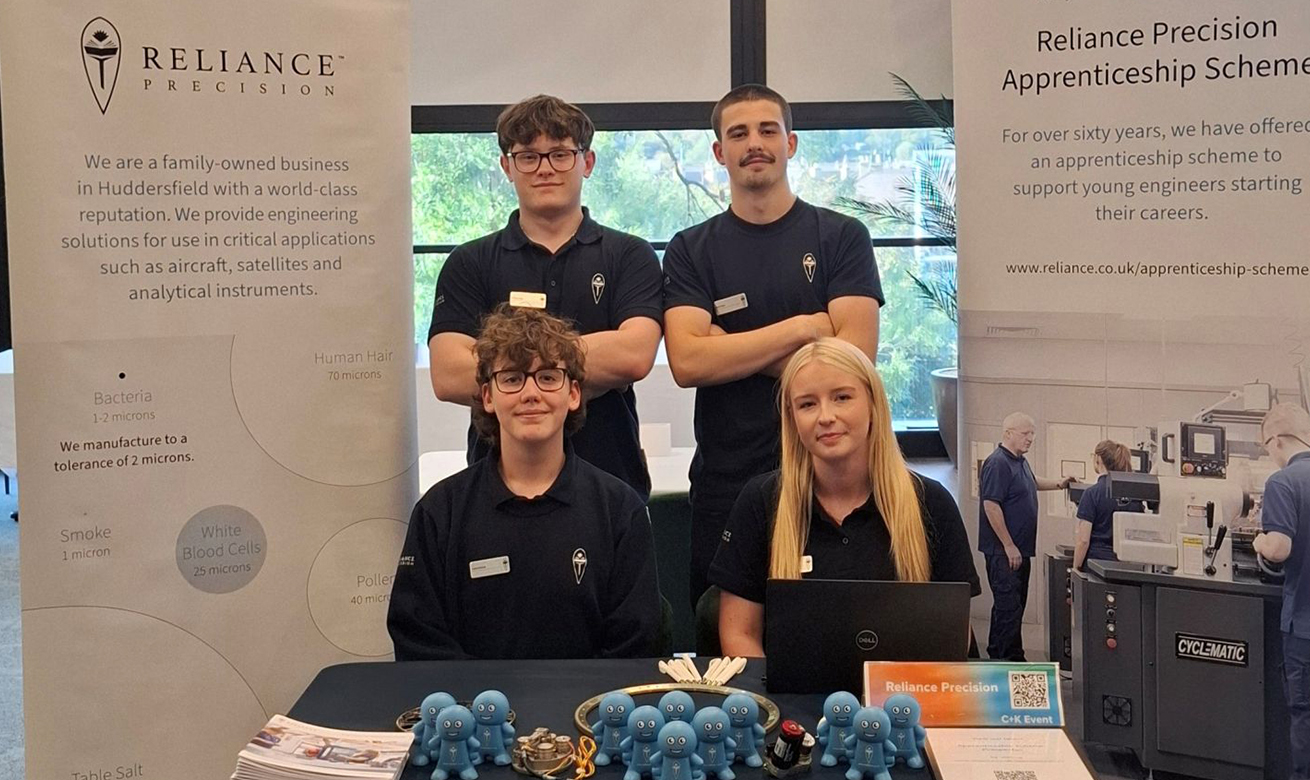
We provide process critical and mission ready engineering solutions for use in complex environments. Our markets include life sciences, defence and space. The precise nature of our work means that we manufacture and measure in microns – that’s a thousandth of a millimetre.
Who are we looking for?
If you have a genuine interest in engineering and a real drive to learn more, then you could be a Reliance apprentice. We are looking for individuals who are motivated and reliable with great problem solving and communication skills. You’ll also need a positive approach to training, as well as being determined to work hard to develop your skills throughout your four year advanced apprenticeship.
Entry requirements
You should have, or expect to gain, at least five GCSEs (or equivalent) at grade 4 or above including Maths, English and Science. Candidates should also be computer literate and comfortable with the Microsoft Office Suite (e.g. Word, PowerPoint and Excel).
Gain practical skills through hands-on training
All of our apprentices begin their careers in our on-site EAL recognised training facility which has been accredited by the Institution of Mechanical Engineers (IMechE) and the Institution of Engineering and Technology (IET).
Year One
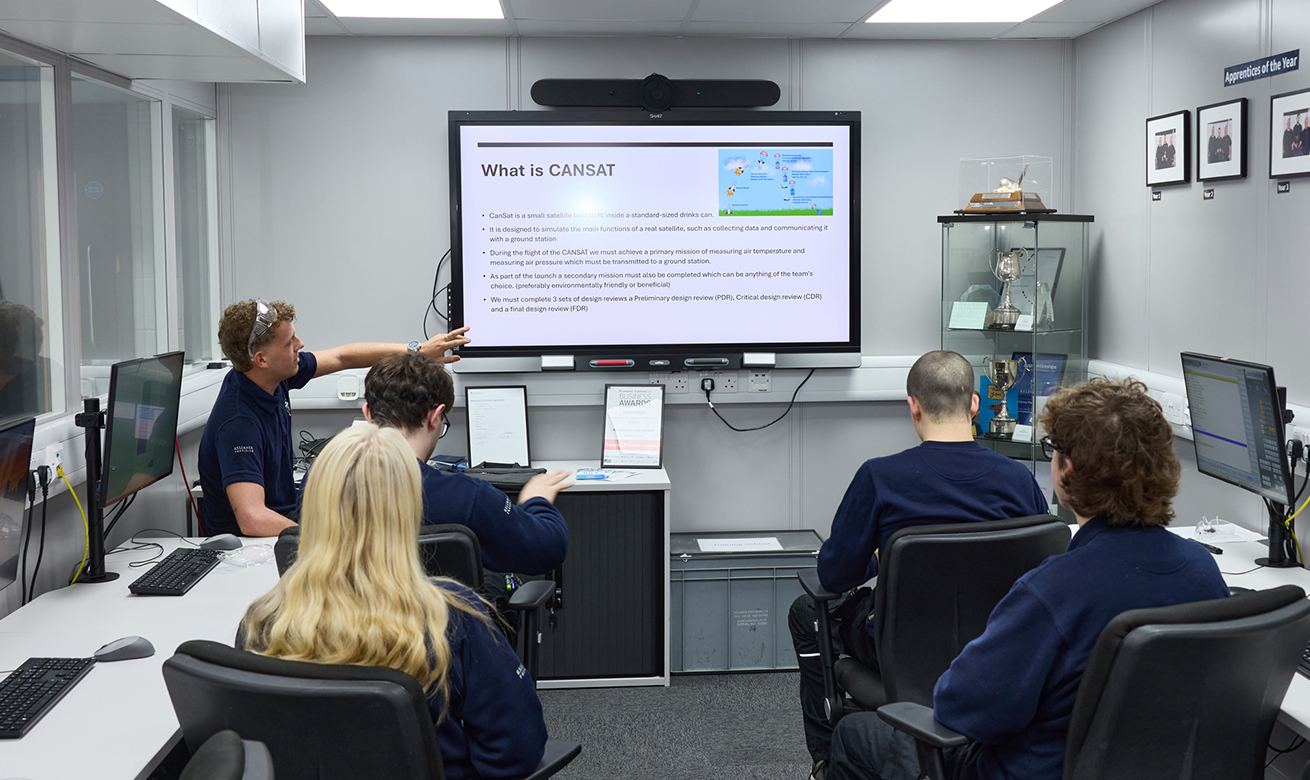
During your first year, you will cover the principles of manual turning and milling as well as how to work safely in a manufacturing environment. You will be taught technical drawing and you will spend time using Computer Aided Design (CAD) software like SolidWorks. You will then learn how to program and operate Computer Numerical Control (CNC) machinery. All of this initial training ensures that you are prepared for working as part of the wider Reliance team.
Year Two
Your second year provides a chance to experience working in different departments across the company to see which pathway might suit you best. You can find more information about each pathway on page 10.
Year Three
In the third year of your apprenticeship, you will begin to develop your skills in one particular area of the business, relating to your training pathway.
Year Four
Your fourth year allows you to gain further knowledge and practical experience in your specialist area. Most apprentices stay in their chosen area or department after they graduate but there may be opportunity to try other roles during your career.

Get paid to learn and achieve recognised qualifications
A Reliance apprenticeship is a paid position that offers rising pay as your skills increase. You will start earning from your first day.
You will learn from our innovative engineers who have decades of experience in precision engineering. You will also attend Kirklees College once a week for further training at their Engineering Centre.
Upon completing the four years of your advanced apprenticeship you will have gained recognised further education qualifications. Following this, there may be opportunity for you to continue your studies. Many of our apprentices have gone on to receive higher education qualifications and some have achieved Chartered Engineer status.
Reliance also believes in the importance of developing soft skills like communication, critical thinking and self-reflection. All apprentices take part in multiple soft skills training sessions, delivered by trained professionals, over the four years of the scheme. During your first year you will visit trade shows and other companies in the local area on quarterly field trips to learn more about the wider engineering industry.
Discover your training pathway at Reliance
All of our apprentices begin their training in the same way, but they go on to have very different careers.
Towards the end of your second-year rotation around the business, you will begin to follow a specialised training pathway to help you develop skills and gain qualifications in a particular area. There are four core pathways available to Reliance apprentices: Manufacturing Engineer, Assembly Engineer, Metrology Engineer and Design Engineer. You will choose your pathway by applying for the role(s) that suit you best. Available positions are influenced by the needs of the business and vary from year to year.
Manufacturing Engineer
Become an expert in using tools, machines and processes.
What does a Manufacturing Engineer do?
Manufacturing Engineers are responsible for producing precision components designed for use in critical applications. Components are made using CNC machines and are inspected throughout the manufacturing process to ensure they meet the strict requirements of our customers. Manufacturing Engineers will typically specialise in one area such as Turning, Milling or Gear Cutting. You’ll get the chance to experience all of these departments during your second year rotation of the business.
What makes a good Manufacturing Engineer?
A good Manufacturing Engineer will have excellent communication skills and the ability to work in a team as well as on their own. They will develop strong technical skills and must be happy following a process to ensure every component is manufactured in exactly the same way. Manufacturing Engineers often have good analytical and problem solving skills. They are able to identify why a problem has occurred and can suggest opportunities for improving processes, without compromising quality.

Assembly Engineer
Become an expert in building real-world technologies.
What does an Assembly Engineer do?
Assembly is an important part of the production process. Assembly Engineers combine components that have been made by Manufacturing Engineers into complex sub-systems for our customers. These systems are often designed for use in mission ready or process critical environments where accuracy is of paramount importance. Some assembly work takes place in a clean environment to prevent contamination. Before a sub-system is delivered to the customer, Assembly Engineers test and measure their work to ensure it meets requirements.
What makes a good Assembly Engineer?
Although you will learn everything you need to know as part of your apprenticeship, there are a few traits that you might already have that would mean you’d be a fantastic Assembly Engineer. You will need good dexterity, hand-eye coordination and the patience to assemble complex sub-systems which will sometimes have many different parts. Typically, those who are well suited to this role approach tasks in a methodical and organised way. If you enjoy building models and following a process to get things done, you’ll be well suited to this pathway.

Metrology Engineer
Become an expert in the science of measurement.
What does a Metrology Engineer do?
Metrology Engineers are specialists in the science of measurement. They operate precise measurement equipment and are responsible for conducting and managing the analysis of components and assemblies to ensure they meet the correct standards. Final inspection of components occurs at the end of the production process, but measurement occurs at every stage of manufacture. Reliance specialises in the manufacture of precision components and sub-systems for applications that require incredible accuracy, metrology is therefore an important part of the production process.
What makes a good Metrology Engineer?
Metrology Engineers need excellent observation and problem solving skills. They are logical thinkers and will often have a talent for maths. Metrology Engineers are required to take measurements, analyse data and suggest improvements to develop and improve processes. They are also required to work with others, so good communication skills are important. Metrology Engineers need to have a strong attention to detail. Apprentices who follow this pathway will learn about metrology and the science of measurement from Reliance’s in-house experts.

Design Engineer
Become an expert in making ideas work.
What does a Design Engineer do?
Design Engineers focus on designing, developing, and testing new products, precision components and sub-systems. There are a few different types of project that a Design Engineer might get involved with. They might work on a solution for a customer, but they are also involved with creating new Reliance Technologies – a bank of products designed and manufactured by Reliance for mission ready and process critical applications. Design Engineers will work with different people across the company including sales, production engineering and manufacturing.
What makes a good Design Engineer?
Design Engineers are logical, analytical thinkers. They need to have the ability to find the best, often creative, solution to a challenge. You might be suited to a career as a Design Engineer if you have a good attention to detail, excellent problem solving skills and the patience required to refine an idea until it is right. Design Engineers should be able to work on their own and as a team. In some cases, they are required to work collaboratively with a customer’s engineering design team to find a solution, so good communication skills are very important.

Manufacturing Engineer
Become an expert in using tools, machines and processes.
What does a Manufacturing Engineer do?
Manufacturing Engineers are responsible for producing precision components designed for use in critical applications. Components are made using CNC machines and are inspected throughout the manufacturing process to ensure they meet the strict requirements of our customers. Manufacturing Engineers will typically specialise in one area such as Turning, Milling or Gear Cutting. You’ll get the chance to experience all of these departments during your second year rotation of the business.
What makes a good Manufacturing Engineer?
A good Manufacturing Engineer will have excellent communication skills and the ability to work in a team as well as on their own. They will develop strong technical skills and must be happy following a process to ensure every component is manufactured in exactly the same way. Manufacturing Engineers often have good analytical and problem solving skills. They are able to identify why a problem has occurred and can suggest opportunities for improving processes, without compromising quality.
Assembly Engineer
Become an expert in building real-world technologies.
What does an Assembly Engineer do?
Assembly is an important part of the production process. Assembly Engineers combine components that have been made by Manufacturing Engineers into complex sub-systems for our customers. These systems are often designed for use in mission ready or process critical environments where accuracy is of paramount importance. Some assembly work takes place in a clean environment to prevent contamination. Before a sub-system is delivered to the customer, Assembly Engineers test and measure their work to ensure it meets requirements.
What makes a good Assembly Engineer?
Although you will learn everything you need to know as part of your apprenticeship, there are a few traits that you might already have that would mean you’d be a fantastic Assembly Engineer. You will need good dexterity, hand-eye coordination and the patience to assemble complex sub-systems which will sometimes have many different parts. Typically, those who are well suited to this role approach tasks in a methodical and organised way. If you enjoy building models and following a process to get things done, you’ll be well suited to this pathway.
Metrology Engineer
Become an expert in the science of measurement.
What does a Metrology Engineer do?
Metrology Engineers are specialists in the science of measurement. They operate precise measurement equipment and are responsible for conducting and managing the analysis of components and assemblies to ensure they meet the correct standards. Final inspection of components occurs at the end of the production process, but measurement occurs at every stage of manufacture. Reliance specialises in the manufacture of precision components and sub-systems for applications that require incredible accuracy, metrology is therefore an important part of the production process.
What makes a good Metrology Engineer?
Metrology Engineers need excellent observation and problem solving skills. They are logical thinkers and will often have a talent for maths. Metrology Engineers are required to take measurements, analyse data and suggest improvements to develop and improve processes. They are also required to work with others, so good communication skills are important. Metrology Engineers need to have a strong attention to detail. Apprentices who follow this pathway will learn about metrology and the science of measurement from Reliance’s in-house experts.
Design Engineer
Become an expert in making ideas work.
What does a Design Engineer do?
Design Engineers focus on designing, developing, and testing new products, precision components and sub-systems. There are a few different types of project that a Design Engineer might get involved with. They might work on a solution for a customer, but they are also involved with creating new Reliance Technologies – a bank of products designed and manufactured by Reliance for mission ready and process critical applications. Design Engineers will work with different people across the company including sales, production engineering and manufacturing.
What makes a good Design Engineer?
Design Engineers are logical, analytical thinkers. They need to have the ability to find the best, often creative, solution to a challenge. You might be suited to a career as a Design Engineer if you have a good attention to detail, excellent problem solving skills and the patience required to refine an idea until it is right. Design Engineers should be able to work on their own and as a team. In some cases, they are required to work collaboratively with a customer’s engineering design team to find a solution, so good communication skills are very important.
How to apply
To apply for the Reliance Precision Apprenticeship Scheme, please fill in the application form and send it to apprenticeships@reliance.co.uk
Apprentice news, events and case studies

Apprenticeships FAQs
What are the entry requirements?
You should have, or expect to gain, at least five GCSEs (or equivalent) at grade 4 or above including Maths, English and Science.
What happens after I apply?
Please see pages 20 – 21 of the prospectus for details about the recruitment process.
How many places are there?
We typically take on around 5 – 6 apprentices per year.
When is the deadline for applications?
Applications are usually open from the beginning of January to the end of February each year. You can check our website to confirm whether the scheme is open for applications.
Is the position full-time?
A Reliance apprenticeship is a full-time position. If you are over 18 you will work 38 hours a week in total, including one day at college. If you are under 18 you will work 36 hours a week in total, including one day at college. You are considered as a full-time employee from the start of your apprenticeship and you will be eligible to join our healthcare and pension schemes.
How long is the apprenticeship scheme?
It takes 4 years to complete a Reliance apprenticeship.
Is there an age limit?
Most of our apprentices join us after completing their GCSEs but there is no age limit. However, you must be 16 or older to do an apprenticeship.
Where will I attend college?
You will attend Kirklees College Engineering Centre in Huddersfield (Turnbridge Road, Huddersfield, HD1 6AG).
When does the scheme start?
The scheme starts in August each year. If you are successful in your application you will be given an official start date.
Is your recruitment process inclusive?
Yes. We are committed to creating an inclusive environment where everyone feels welcome and respected. We encourage applications from all individuals and can make reasonable adjustments to support candidates throughout the recruitment process. You can contact our recruitment team to discuss any support you might need (apprenticeships@reliance.co.uk).
Do I have to pay to become an apprentice?
No. It is a paid position, so we pay you!